Can You Tan With Wet Hair? Tanning Bed Tips and Safety
If you have ever arrived at a tanning salon immediately after showering, swimming, or washing your hair, you may have asked, “Can I go in a tanning bed with wet hair?”
It is a reasonable question. Many people have heard different opinions about whether wet hair changes how tanning works, whether water protects your head from UV exposure, or whether you should always dry your hair completely before entering a tanning bed.
The reality is simpler.
Wet hair generally does not stop you from using a tanning bed, but it does not provide any special tanning benefit or UV protection either. Drying your hair before your session is usually more comfortable and can make the overall experience easier.
At the same time, it is important to remember that wet hair is not the primary safety issue associated with UV tanning. The main concern is exposure to ultraviolet radiation.
Can I Tan With Wet Hair?
Yes, having wet or damp hair does not automatically prevent your skin from tanning.
UV tanning equipment is designed to expose the skin to ultraviolet radiation. The moisture in your hair does not switch off the UV lamps or prevent exposed areas of skin from receiving UV radiation.
However, there is a difference between being technically able to use a tanning bed and having the best preparation routine.
If your hair is dripping wet, drying it first is usually more comfortable.
If your hair is only slightly damp, the practical difference may be minimal.
Does Wet Hair Change How You Tan?
Not in any meaningful way for most exposed areas of skin.
Your tanning response depends on the UV radiation reaching your skin, as well as your individual skin characteristics, equipment design, lamp output, positioning, and exposure duration.
Wet hair does not make UV rays more effective at tanning your skin.
However, your hair can influence tanning coverage.
If you have long hair, it can cover areas around your neck, shoulders, or upper back. This physical coverage may affect how evenly those areas are exposed.
So, when thinking about wet hair and tanning, hair position may matter more than hair moisture.
Does Water Make UV Tanning Safer?
No.
This is one of the most important points.
Water does not make UV tanning safe.
A wet head or wet hair does not prevent UV radiation from reaching exposed skin.
You should never think of water as a natural sunscreen or use wet hair as a method of reducing UV exposure.
The FDA warns that indoor tanning exposes users to UV radiation and can result in burns, premature skin aging, eye damage, and increased skin cancer risk.
Therefore, whether your hair is wet, damp, or dry does not remove the fundamental risks of indoor UV tanning.
Can Wet Hair Make You Feel Colder in a Tanning Bed?
Yes, it may.
When water evaporates from your hair, it can create a cooling sensation.
That can make your head feel cooler during the early part of a tanning session.
However, this does not mean that the tanning bed is less warm overall.
Your comfort level can also vary depending on:
- Hair length
- Amount of water in your hair
- Room temperature
- Ventilation
- Tanning bed design
- Session duration
- Personal sensitivity to heat
If you become uncomfortable or feel unwell during a tanning session, stop the session rather than trying to tolerate the discomfort.
Is Wet Hair Bad for Your Hair in a Tanning Bed?
The combination of wet hair and UV exposure is not ideal as a regular hair-care routine.
Hair is not living tissue in the same way that skin is, but the hair fiber can experience dryness and damage from environmental exposure.
Repeated UV exposure can contribute to changes in hair appearance and texture.
If you regularly use tanning equipment, consider taking care of your hair separately from your tanning routine.
This can include:
- Avoiding unnecessary heat styling.
- Using appropriate conditioning products.
- Limiting repeated chemical treatments.
- Keeping hair hydrated.
- Protecting hair from excessive environmental exposure.
However, hair protection should never replace proper skin and eye protection when using a UV tanning bed.
Should You Shower Before or After a Tanning Bed?
This depends partly on your personal routine.
Some people prefer to shower before tanning because they want clean skin without excess cosmetics or skincare products.
Others prefer to shower afterward.
There is no universal rule that says everyone must shower at a particular time.
The important thing is to follow the tanning equipment’s instructions and understand how your skincare products interact with UV exposure.
If you shower before tanning, simply dry your skin and hair before entering the equipment.
Can You Tan Immediately After Washing Your Hair?
You can generally tan after washing your hair, but there is little reason to enter the tanning bed with soaking-wet hair.
After washing:
- Gently towel-dry your hair.
- Remove excess water from your skin.
- Allow your hair to become damp rather than dripping wet.
- Follow the tanning bed’s instructions.
- Use the required protective eyewear.
- Follow the recommended exposure schedule.
This takes only a few extra minutes and can make your session more comfortable.
Can Wet Hair Affect Your Tanning Pattern?
It can indirectly affect your tanning pattern if your hair covers your skin.
Consider someone with long, thick hair.
If the hair falls over the shoulders and upper back, the covered areas may receive less direct UV exposure than surrounding skin.
This may contribute to visible differences in tanning.
However, you should not solve this problem by increasing the tanning time.
If you believe your equipment is producing inconsistent coverage, speak with the tanning salon staff or equipment manufacturer.
The solution may involve equipment design or positioning rather than additional exposure.
Can You Use Wet Hair in a Stand-Up Tanning Bed?
Yes, wet hair does not inherently prevent you from standing inside a tanning bed.
However, the same principles apply.
A stand-up tanning bed is still a UV tanning device when equipped with UV lamps.
Standing upright may change the way your hair sits compared with a horizontal tanning bed, but it does not eliminate UV exposure.
If you operate or use commercial stand-up tanning equipment, always follow the manufacturer’s instructions and applicable safety requirements.
Wet Hair vs. Dry Hair in a Tanning Bed
Here is a simple comparison:
| Factor | Wet Hair | Dry Hair |
|---|---|---|
| Can you use a tanning bed? | Generally possible | Yes |
| Changes UV exposure significantly? | No | No |
| Provides UV protection? | No | No |
| Comfort | May feel cooler or uncomfortable | Usually more comfortable |
| Hair positioning | May stick together or cling | Easier to manage |
| Recommended preparation | Towel-dry first | Ready for session |
The main difference is comfort and practicality, not whether the tanning process works.
What Should You Avoid Before Tanning?
Your hair being wet is only one part of preparing for a tanning session.
You should also pay attention to what is on your skin.
Avoid assuming that every cosmetic or skincare product is appropriate before UV exposure.
Some products can increase irritation or photosensitivity.
If you are using prescription medication, ask your healthcare professional whether it increases sensitivity to UV radiation.
If you have recently used an exfoliating treatment, chemical peel, or other intensive skincare procedure, you may also want to ask a qualified professional whether UV exposure should be avoided.
Can You Tan With Wet Hair After Swimming?
You can physically enter a tanning bed after swimming, but it is better to prepare first.
Swimming pools contain chlorine, while seawater contains salt. Both can contribute to dryness of the skin and hair.
A good routine is:
Swim → Rinse → Towel-dry → Check your skin → Follow tanning instructions
If your skin feels dry, irritated, or uncomfortable after swimming, consider delaying the tanning session.
Adding UV exposure to already-irritated skin may increase discomfort.
Does Wet Hair Help You Tan Faster?
No.
There is no reliable reason to believe that wet hair makes your skin tan faster.
Your tanning response is determined by UV exposure and individual biological factors.
If someone tells you to wet your hair before a tanning session because it supposedly increases tanning speed, there is no good basis for treating that as a professional tanning technique.
Can Wet Hair Protect Your Scalp?
Not reliably.
Wet hair does not replace sunscreen, shade, protective clothing, or other UV protection methods.
If parts of your scalp are exposed, they can still receive UV exposure.
This can be particularly relevant for people with thinning hair or hairstyles that expose portions of the scalp.
Your hair itself should not be considered adequate protection.
Tanning Bed Safety Reminders
If you decide to use UV tanning equipment, remember the basics.
Use Protective Eyewear
Proper protective eyewear is important because UV radiation can damage the eyes.
Follow the Exposure Schedule
Never assume that longer exposure is better.
Follow the schedule provided for the equipment and your skin type.
Do Not Tan Burned Skin
If your skin is already burned or significantly irritated, allow it to recover rather than adding more UV exposure.
Understand the Risks
Indoor tanning is not risk-free.
The FDA and dermatology organizations warn that UV tanning is associated with skin damage, premature aging, and skin cancer risk.
If you want a tanned appearance without UV exposure, non-UV alternatives may be worth considering.
Frequently Asked Questions
Can I go in a tanning bed with wet hair?
Yes, damp hair generally does not prevent you from using a tanning bed, but drying your hair first is usually more comfortable.
Is it better to dry my hair before tanning?
Yes. Towel-drying your hair and removing excess water can improve comfort and prevent your hair from being dripping wet during the session.
Does wet hair protect you from tanning bed UV rays?
No. Wet hair does not provide reliable UV protection.
Can I tan after taking a shower?
Generally yes, but dry your skin and hair first and follow the equipment manufacturer’s instructions.
Can I go tanning after swimming?
It is better to rinse off chlorine or saltwater and dry your skin and hair before using a tanning bed. If your skin is irritated, consider postponing the session.
Does wet hair make you tan faster?
No. Hair moisture does not provide a proven tanning advantage.
Can I use a stand-up tanning bed with wet hair?
Wet hair does not inherently prevent use of a stand-up tanning bed, but drying your hair first is generally more comfortable.
Conclusion
So, can you go in a tanning bed with wet hair?
Generally, yes, but it is better to towel-dry your hair and skin before your tanning session. Wet hair does not make tanning faster, does not provide meaningful UV protection, and does not remove the risks associated with indoor UV exposure.
If you use a tanning bed, focus on the things that actually matter: follow the manufacturer’s instructions, use appropriate protective eyewear, respect the recommended exposure schedule, and avoid tanning already irritated or burned skin.
If you prefer the appearance of a tan without UV exposure, consider non-UV tanning alternatives instead.
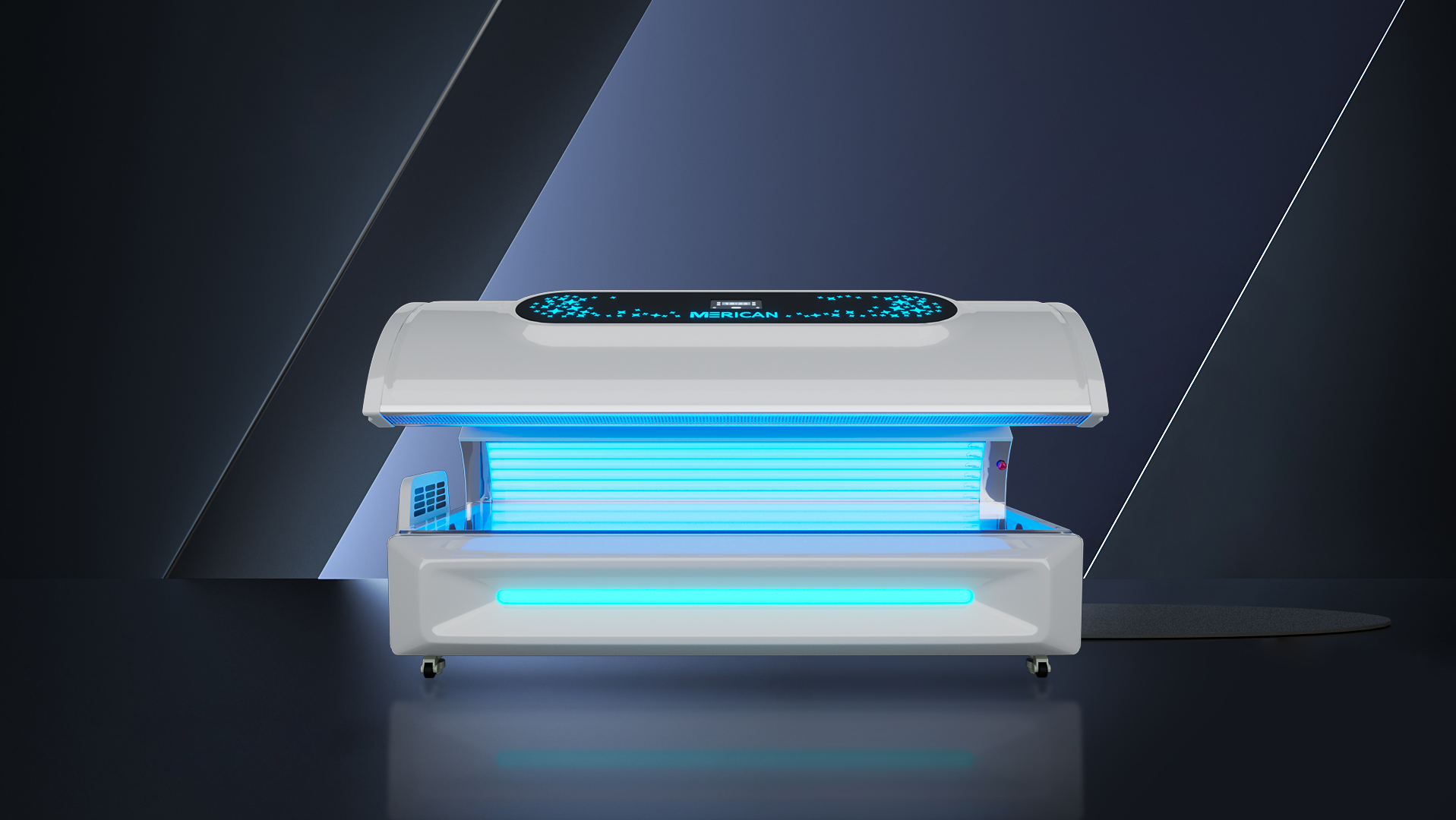
Merican Solarium Tanning Bed W6N for Professional Tanning Businesses
For commercial tanning salons, beauty studios, wellness centers, and international distributors, Merican Solarium Tanning Bed W6N is a professional tanning equipment solution designed for commercial applications.
Merican has 18 years of industry experience and a professional technical and R&D team that supports product development, engineering, and customization. The company offers OEM & ODM services, enabling business customers to develop customized tanning equipment and solutions for different markets and applications.
Merican has multiple certifications and qualifications and has established business and sales channels across international markets. The company also welcomes agents, distributors, salon operators, and regional partners seeking long-term cooperation.
With professional R&D capabilities, manufacturing experience, OEM & ODM customization, international market coverage, and distributor partnership opportunities, Merican provides comprehensive support for businesses looking to develop and expand their commercial tanning equipment portfolio.