As red light therapy becomes mainstream, more people are turning to at-home devices for convenience and affordability. This raises an important question:
do home red light therapy devices really work?
The answer depends on how these devices are designed, how consistently they are used, and how they compare to professional-grade systems.
How Red Light Therapy Works
Red light therapy, also known as photobiomodulation, uses specific wavelengths of red and near-infrared light—typically 630–660 nm and 810–880 nm—to stimulate cellular activity.
When delivered at the correct intensity, these wavelengths can:
-
Boost mitochondrial ATP production
-
Support collagen synthesis
-
Reduce inflammation
-
Promote tissue repair
Do Home Devices Deliver Therapeutic Light?
Some home red light therapy devices can work, but not all are equally effective.
Effective home devices typically have:
-
Verified therapeutic wavelengths
-
Adequate irradiance at treatment distance
-
Consistent LED output
Many low-cost consumer devices lack sufficient power, limiting their ability to produce noticeable results.
What Results Can Users Expect at Home?
With consistent use, home devices may help with:
-
Mild skin aging and fine lines
-
Muscle soreness and recovery
-
Joint stiffness
-
General wellness support
However, results are usually slower and more subtle than with professional systems.
How Professional Systems Differ
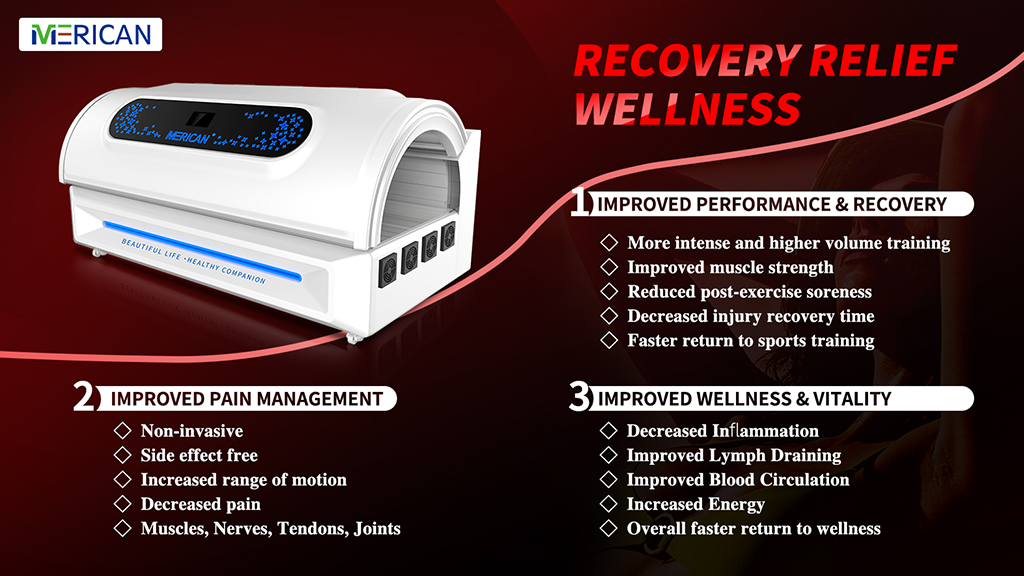
Professional red light therapy systems—such as Merican full-body red light therapy beds—are engineered to deliver:
-
Higher and more uniform power output
-
Full-body coverage in a single session
-
Clinically optimized wavelengths
This allows for deeper penetration and more consistent results, especially for pain management, recovery, and skin rejuvenation.
Conclusion
So, do home red light therapy devices work?
Yes, some do—when they meet proper technical standards and are used consistently. However, professional systems like Merican’s offer greater power, coverage, and efficiency, leading to faster and more noticeable outcomes.