One of the most common questions people ask before starting indoor tanning is how often they should use a tanning bed. Many beginners assume that tanning every day will produce faster results, but in reality, the best tanning results come from proper scheduling, not frequent exposure.
To understand how often you should tan, it is important to understand how the tanning process works. When your skin is exposed to ultraviolet (UV) light in a tanning bed, it triggers melanin production. Melanin is the natural pigment that darkens your skin as a defense mechanism against UV exposure. However, this process takes time. Your skin continues developing color for up to 48 hours after a tanning session. This means tanning again too soon does not give your skin enough time to develop color and may instead increase the risk of overexposure.
For beginners, a typical tanning schedule is 2–3 sessions per week with at least 48 hours between sessions. This schedule allows the skin to gradually build a base tan safely. Building a base tan usually takes several weeks, depending on your skin type and the strength of the tanning bed. Once you have developed a base tan, you can reduce your tanning sessions to once or twice per week to maintain your color.
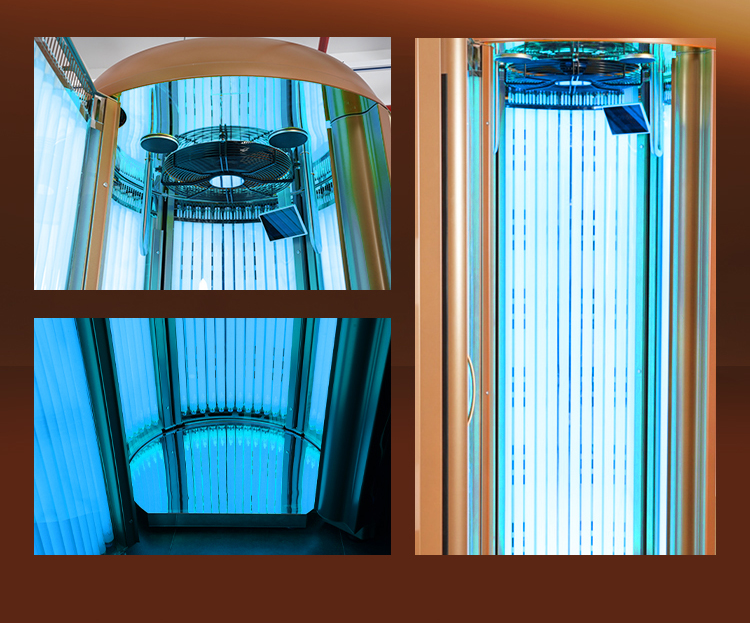
Tanning too frequently can cause several problems. The most immediate issue is skin irritation or tanning bed burns, which can happen if the skin does not have enough time to recover between sessions. Over time, excessive tanning can lead to uneven skin tone, dryness, and faster fading of your tan due to skin peeling. This is why professional tanning salons usually recommend a structured tanning plan rather than daily tanning.
Your skin type plays a major role in determining how often you should tan. People with fair skin (Skin Type I and II) should tan less frequently and use shorter session times. People with medium skin (Skin Type III) can usually follow a standard tanning schedule. People with darker skin (Skin Type IV and above) may tan less frequently because they can develop color more easily and maintain it longer.
In addition to frequency, tanning preparation and aftercare are also very important. Before tanning, make sure your skin is clean and free of makeup, perfumes, and deodorants, as these can cause uneven tanning. After tanning, applying a good moisturizer helps lock in moisture and extend the life of your tan. Many people also use indoor tanning lotions to improve tanning results and keep the skin hydrated.
Another important tip is to avoid showering immediately after a tanning session unless necessary, as some tanning processes continue developing after exposure. Waiting a few hours before showering can help improve tanning results in some cases.
Overall, the best tanning results come from consistency, proper spacing between sessions, and good skin care, not from tanning every day. Following a smart tanning schedule will help you achieve a darker, more even tan while reducing the risk of skin damage.