Can You Lay on Your Side in a Tanning Bed? What You Need to Know
Can I lay on my side in a tanning bed? It sounds like a simple question, but the answer depends on the type of tanning bed, its lamp configuration, and the manufacturer’s recommended positioning.
When using a horizontal tanning bed, many people want to move slightly during a session. You may want to improve comfort, expose the sides of your body, or reduce the appearance of uneven tanning. But changing your position can also change the way UV radiation reaches your skin.
The key is to understand that more exposure is not necessarily better exposure. Indoor tanning equipment should always be used according to the manufacturer’s instructions, including its recommended exposure position and schedule.
The FDA recommends following the exposure schedule for your skin type, using protective eyewear, and sticking to the specified time limit.
Can You Lie on Your Side While Tanning?
The safest answer is: only if the equipment’s instructions allow it.
There is no universal positioning rule that applies to every tanning bed.
Some horizontal tanning systems are designed around specific body positions and lamp arrangements. Others may have different configurations that affect how close your skin should be to the lamps.
If the manufacturer’s manual recommends lying flat, you should not assume that turning onto your side is appropriate.
This is particularly important because the distance between the skin and UV lamps can affect the amount of radiation received.
Why Position Matters in a Tanning Bed
Your position can influence the distribution of UV exposure across your body.
Imagine a tanning bed with lamps arranged above and below your body. When you lie in the recommended position, the equipment is designed to deliver exposure according to its specifications.
When you turn onto your side, the relationship between your skin and the lamps changes.
As a result:
- Some areas may face the lamps more directly.
- Other areas may move farther away.
- Certain parts of the body may receive less exposure.
- The overall distribution may become different from the manufacturer’s intended setup.
This is why changing position should not be treated as a simple method for “getting more tan.”
Does Lying on Your Side Help Tan Your Sides?
This is one of the most common reasons people ask the question.
It may seem logical that turning onto your side will expose the side of your body more directly. However, whether this actually improves tanning coverage depends on the specific lamp arrangement.
Some tanning beds are designed to provide relatively broad exposure from multiple directions. In those systems, turning may offer little benefit.
Other designs may have different coverage patterns.
Instead of assuming that side-lying is necessary, check the manufacturer’s instructions for the exact model.
Should You Turn Over Halfway Through a Tanning Session?
Not necessarily.
A common misconception is that you need to turn over in a tanning bed in the same way you would while lying in the sun.
Many tanning beds are designed with lamps positioned to expose the body from more than one direction. In those cases, turning over may be unnecessary.
If the tanning bed is designed for a specific stationary position, remain in that position for the recommended exposure time.
The best source of information is the equipment manual or the trained staff at the tanning facility.
What Position Gives the Most Even Tan?
There is no single position that guarantees an even tan on every tanning bed.
Even tanning depends on:
- Lamp configuration
- Distance between the lamps and skin
- Body position
- Exposure time
- Individual skin characteristics
- Whether areas are covered or pressed against a surface
- The equipment’s design and condition
The most reliable approach is to use the position recommended by the manufacturer.
Trying to create a “perfect” tanning position by constantly rotating your body may actually make the exposure less predictable.
Can You Move Your Legs in a Tanning Bed?
Small movements may be possible, but again, follow the equipment’s instructions.
Some people naturally adjust their legs or arms to improve comfort or prevent certain areas from being tightly pressed against the acrylic.
However, movement should not involve changing the distance to the lamps significantly or extending the session.
If you believe a particular area is consistently receiving less exposure, talk to the tanning salon staff rather than increasing your exposure time yourself.
What About Your Arms?
The position of your arms can influence how much of the torso and underarm area is exposed.
Depending on the equipment design, keeping your arms in a natural position may create some overlap with the torso.
However, constantly moving the arms is not necessary.
A tanning bed should be operated according to the recommended exposure position rather than treating the session like an outdoor tanning session where you need to continually reposition yourself.
Can You Lie on Your Side to Avoid Pressure Marks?
Some users are concerned about pressure areas that appear lighter after tanning.
The body areas most commonly discussed include the shoulders, hips, elbows, and other areas that make contact with the tanning surface.
Changing position may change where pressure occurs, but this does not mean that side-lying is the correct solution.
More importantly, you should not increase the total UV exposure time simply to compensate for cosmetic differences.
If you have concerns about uneven coverage, ask whether the equipment is appropriate for your desired tanning pattern and follow the manufacturer’s operating guidance.
Tanning Bed Position vs. Stand Up Tanning Bed
One reason some users prefer stand-up tanning systems is that they do not need to lie on an acrylic surface.
A stand-up tanning bed allows the user to remain upright during the session. Depending on the equipment’s lamp arrangement and design, this can provide a different user experience from a horizontal tanning bed.
However, stand-up equipment still uses UV radiation and should not be considered risk-free.
The FDA states that tanning lamps can be as dangerous as outdoor tanning because they emit UV radiation.
The American Academy of Dermatology likewise states that indoor tanning devices emit harmful UVA and UVB radiation and are associated with increased risks of melanoma and other skin cancers.
How to Use a Tanning Bed More Responsibly
If you choose to use a UV tanning bed despite the health risks, pay close attention to the equipment instructions.
1. Read the Exposure Schedule
Never guess how long you should stay in a tanning bed.
Use the recommended exposure schedule for the equipment and your skin type.
2. Wear Approved Protective Eyewear
Do not rely on closing your eyes as a substitute for protective eyewear.
The FDA requires tanning equipment labeling to warn about eye injury and the need for protective eyewear.
3. Do Not Exceed the Recommended Time
A longer session does not automatically produce a better result.
The FDA specifically advises users to follow the recommended exposure times and stick to the time limit.
4. Avoid Additional UV Exposure
Remember that UV exposure can come from multiple sources. If you use a tanning bed and then spend substantial time in direct sunlight, your overall UV exposure may increase.
5. Pay Attention to Skin Reactions
If you develop significant redness, pain, blistering, or other signs of skin injury, do not continue tanning.
UV burns may not become obvious immediately. FDA guidance notes that sunburn can take 6 to 48 hours to develop.
Is a Darker Tan Better?
Not from a health perspective.
The FDA explains that increased melanin production is the skin’s response to UV radiation and that there is no such thing as a safe tan.
The American Academy of Dermatology also emphasizes that indoor tanning can damage skin DNA and increase the risk of skin cancer.
Therefore, the objective should not be to maximize UV exposure.
If the goal is simply to achieve the appearance of a tan, non-UV tanning alternatives may be worth considering.
Frequently Asked Questions
Can I lay on my side in a tanning bed for a few minutes?
Do so only if the specific equipment’s instructions permit it. Changing position can alter your distance and angle relative to the UV lamps.
Can I sleep in a tanning bed?
No. You should never sleep or exceed the prescribed exposure time in a tanning bed. The FDA recommends sticking to the equipment’s time limit.
Do I need to turn over in a tanning bed?
Not necessarily. Many systems are designed to expose the body from multiple directions. Follow the manufacturer’s instructions instead of automatically turning over.
Does side tanning make your tan more even?
Not necessarily. It can change the distribution of UV exposure but does not guarantee more even results.
Is a stand-up tanning bed better than a lay-down tanning bed?
Neither can be considered universally better. Stand-up and horizontal systems provide different user experiences and equipment designs. The more important consideration is using the equipment according to the manufacturer’s instructions.
Can I use a tanning bed if I have sensitive skin?
If you have sensitive skin, a history of skin problems, or take medications that may increase UV sensitivity, consult a healthcare professional before using UV tanning equipment. FDA-required labeling specifically warns that certain medications and cosmetics can increase UV sensitivity.
Conclusion
So, can you lay on your side in a tanning bed? The answer depends on the specific tanning bed and its manufacturer’s recommended exposure position.
While changing position may seem like an easy way to improve coverage or comfort, it can also change how UV radiation reaches different areas of your body. Rather than constantly turning or increasing exposure time, follow the equipment’s instructions and use the recommended exposure schedule.
If you are looking for an alternative to a horizontal tanning bed, a stand-up tanning bed can provide a different commercial tanning experience without requiring the user to lie on an acrylic surface. However, because stand-up tanning beds also use UV radiation, they carry the same fundamental UV-related health considerations.
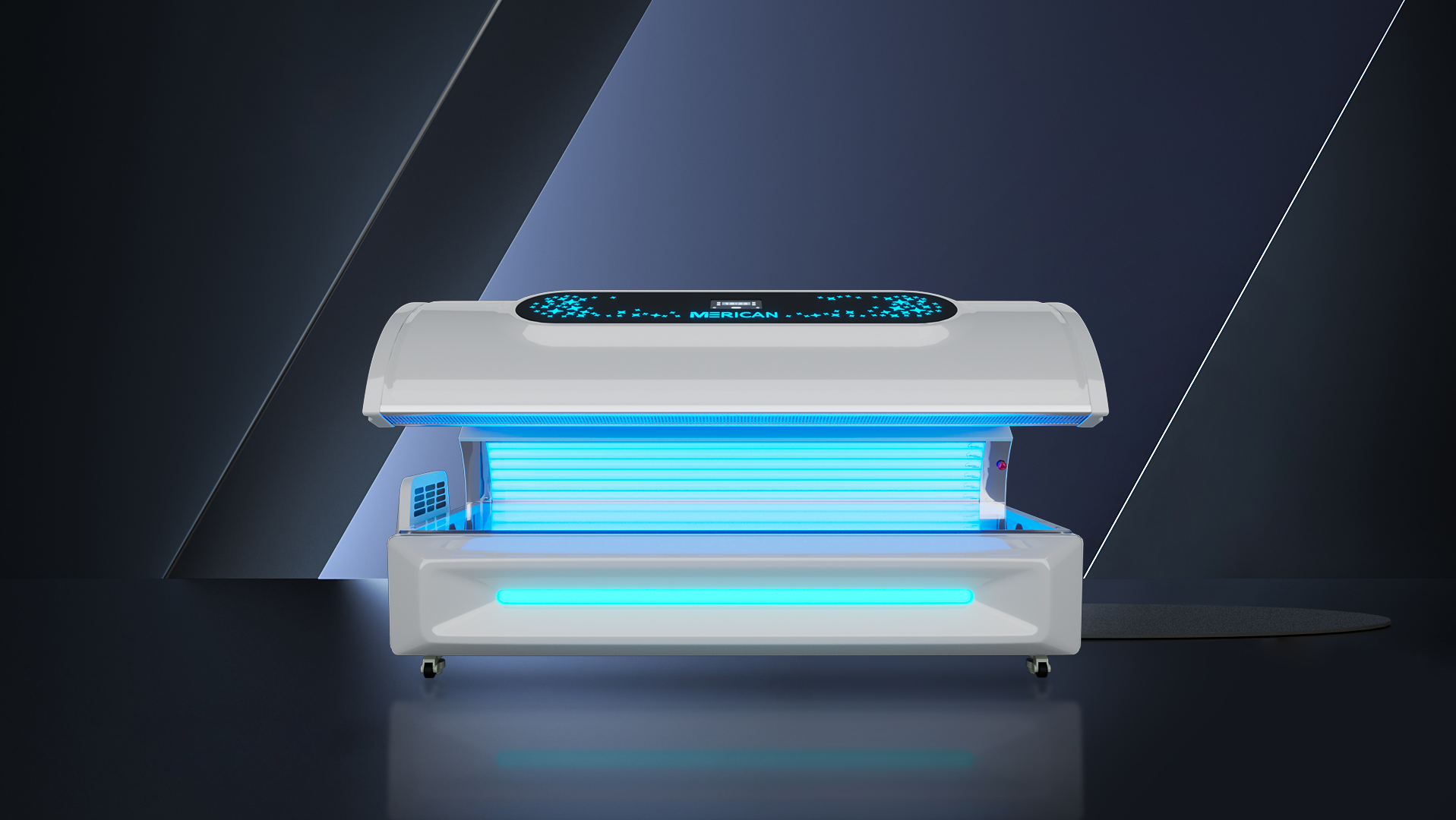
Merican Solarium Tanning Bed W6N for Professional Applications
For tanning salons, beauty businesses, wellness facilities, and distributors, Merican Solarium Tanning Bed W6N offers a professional equipment option for commercial tanning environments.
Merican has 18 years of experience in the industry, backed by a professional technical and R&D team with strong product development capabilities. The company supports OEM & ODM customization, enabling business partners to customize products and solutions based on different market requirements.
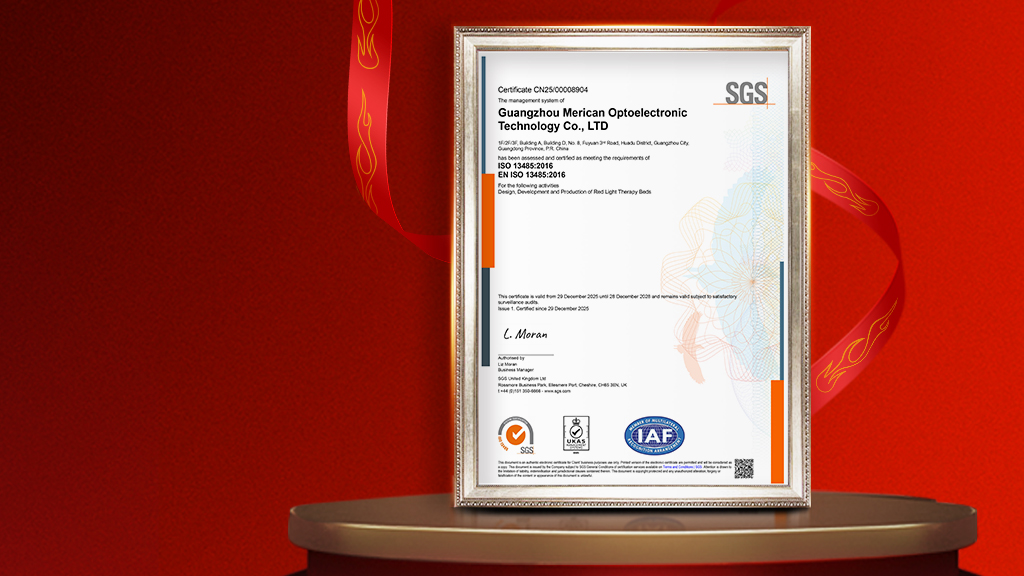
Merican has multiple certifications and qualifications supporting its international business and has established sales and cooperation across markets worldwide. In addition to supplying professional tanning equipment, Merican welcomes agents, distributors, and regional partners looking to expand their commercial tanning equipment business.
For businesses seeking a long-term equipment partner, Merican combines product development, manufacturing capabilities, international market experience, and customization support to help partners build competitive tanning solutions.